
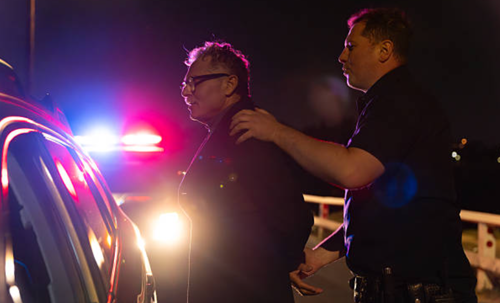
You probably did not start your drive in Concord expecting blue lights in your rearview mirror and an officer asking how much you had to drink. For many people, a normal night out or a simple drive home turns into a DWI investigation in just a few minutes. By the time you are blowing into a device or walking an imaginary line on the shoulder of the road, it can feel like things are already out of your control. Afterward, most drivers sit at home replaying every moment and asking the same questions. Why did the officer stop me in the first place? Did they run those tests the right way? Is there anything that can be done now, or is my case already lost because of a number on a screen? Those questions are common, and answering them starts with understanding how local law enforcement in Concord and Cabarrus County is trained to detect and document suspected DWI.
At Scott C. Robertson Law Office, P.C., we have focused on criminal defense in Concord and Cabarrus County since 1994. Our work has given us a close look at how local officers conduct traffic stops, checkpoints, field sobriety tests, and breath testing in real cases, not just in training manuals. In this guide, we draw on that experience to explain how DWI detection actually works in this area and what it may mean for your case.
Call (704) 795-9200 today to setup a consultation, or contact us online to learn more.
Why Concord Drivers Get Stopped for Suspected DWI
Most DWI investigations in Concord begin as ordinary traffic stops. Officers are trained to watch for certain driving patterns that research links to possible impairment. That can include weaving within your lane, drifting over lane lines, taking unusually wide turns, braking suddenly for no clear reason, or driving much slower than the posted speed. A late or missed response to a green light can also catch an officer’s eye, especially late at night.
In many cases, the official reason on the ticket is something minor. We routinely see stops in Cabarrus County that start with a tag light out, a rolling stop at a sign, a turn signal violation, or a few miles over the limit. The law only requires that the officer have a lawful reason to stop your vehicle, such as a traffic infraction. Once they make that stop, they can begin looking for signs of impairment if something about your driving, your appearance, or your behavior raises concern.
Context also matters. Concord officers know where bars, restaurants, and event venues are located, and they know which roadways tend to have more impaired drivers during certain hours. A car that touches the fog line twice at 2 p.m. on a Tuesday may draw less attention than the same behavior at 1 a.m. on a Saturday near a busy nightlife area. That does not mean officers can stop drivers without cause, but it does mean they are often watching more closely in those areas and hours.
In plain terms, the first stage of DWI detection is about “reasonable suspicion,” which means specific facts that cause an officer to think a violation might be occurring. From our decades of reviewing Concord DWI reports, we see the same patterns repeat over and over. Understanding exactly what the officer wrote, and whether your driving truly matched that description, is often the first step in evaluating the strength of the stop and the rest of the case.
What Concord Officers Look For After They Walk Up to Your Window
The second stage of DWI detection begins the moment the officer steps out of the patrol car and approaches your window. During that first short conversation, officers are trained to observe your behavior closely and to note everything that may suggest impairment. They are paying attention to whether they smell alcohol, whether your eyes look bloodshot or glassy, how clearly you speak, and whether you fumble with your license or registration.
Simple questions such as “Where are you coming from?” and “Have you had anything to drink tonight?” serve more than one purpose. The officer is listening to what you say, but they are also evaluating how you say it. Do you answer promptly and clearly, or do you seem confused by basic questions? Do your answers change when they are repeated in a different way? Even small admissions, such as “I had a couple earlier,” often show up word-for-word in the report later. Most people try to be cooperative and polite during this first contact, which is understandable. What many do not realize is that the officer may already be mentally checking boxes on an internal list of “clues,” such as odor of alcohol of a certain strength, slurred speech, or difficulty finding documents. Some of those signs can be caused by things other than alcohol, such as fatigue, allergies, or nervousness, but they still get written into the report.
We regularly compare what Concord and Cabarrus County officers write in these early observation sections with the body camera and dash camera videos. Sometimes the video supports the report, and sometimes it raises questions about whether certain descriptions are exaggerated or copied from a template. Knowing that this is the stage where the officer starts building the case file reminds us to examine those first few minutes of the stop carefully when we review a DWI case.
How Field Sobriety Tests Work on Concord Roadsides
If an officer believes there are enough signs of possible impairment during the initial contact, the next step is often to ask you to step out of the car for field sobriety tests. In North Carolina, officers commonly use a set of standardized tests developed through federal research. The three main ones are the Horizontal Gaze Nystagmus test, the Walk and Turn test, and the One Leg Stand test.
The Horizontal Gaze Nystagmus test involves tracking an object, usually a pen or light, with your eyes while keeping your head still. The officer looks for involuntary jerking movements in your eyes at certain angles, which can become more pronounced with alcohol consumption. The Walk and Turn test usually requires you to take nine heel-to-toe steps along a straight line, turn in a specific way, and take nine steps back, all while following instructions and keeping your arms at your sides. The One Leg Stand test involves standing on one foot and counting out loud until the officer tells you to stop.
Each of these tests has specific “clues” officers are trained to watch for. On the Walk and Turn test, for example, they may note starting before the instructions are finished, stepping off the line, missing heel-to-toe by more than half an inch, turning incorrectly, or using arms to balance. On the One Leg Stand, they may record putting your foot down early, hopping, or swaying. The more clues they note, the more they may feel they have probable cause to arrest. In practice, however, these tests often take place in conditions that are far from ideal. We have seen tests conducted on sloped shoulders, cracked pavement, gravel, or uneven grass around Concord. Lighting can be poor, traffic can be rushing by, and the weather may be cold, windy, or rainy. Those factors can affect balance and concentration even in people who have not had anything to drink. Clear and complete instructions are also critical, and rushed or confusing directions can lead to mistakes that are not really about impairment.
Since 1994, we have reviewed many field sobriety test videos from Concord and across Cabarrus County. Some officers follow their training closely, and some cut corners. In our case reviews, we pay close attention to where the tests were done, exactly how the instructions were given, and whether the behavior shown on video truly matches the list of clues in the report. That level of detail can make a real difference in how much weight a judge or jury gives to these tests.
Portable Breath Tests & Station Tests: What Those Numbers Really Mean
For many drivers, the most stressful moment in a DWI investigation is blowing into a device and waiting to hear the result. It helps to know that not all breath tests serve the same purpose. On the roadside, officers often use a small handheld device, sometimes called a portable breath test. That device is typically used to help the officer decide whether there is probable cause to arrest, not to provide the official number used in court.
The official chemical test usually happens later, either at the station, a magistrate’s office, or a medical facility. In many North Carolina DWI cases, that is an evidentiary breath test on a larger machine or a blood test analyzed in a lab. For most drivers, the state generally treats a blood alcohol concentration of .08 or higher as a key threshold for DWI, although there can be different rules for certain categories of drivers and for cases involving drugs. It is easy to assume that a number at or above .08 ends the discussion, but that is not always the case. Timing matters. Your blood alcohol level can be rising or falling, so the reading at the time of the test is not always the same as it was at the time of driving. The law also sets standards for how these tests are requested and administered under North Carolina’s implied consent laws. Questions can arise about whether the officer properly informed you of your rights, whether the machine was functioning properly in general terms, and whether there were other factors, such as recent mouth alcohol, that may have influenced the result.
The roadside portable test has its own limitations. In many situations, its result is not used as the primary proof of guilt at trial. Instead, it is one piece of the probable cause picture along with your driving, your behavior, and the field sobriety tests. When we review a Concord DWI case, we look closely at how and when both types of tests were used, whether the paperwork appears consistent, and whether the overall process fits within North Carolina’s requirements.
How DWI Checkpoints Operate in Concord & Cabarrus County
Drivers in Concord also frequently encounter DWI enforcement through checkpoints rather than individual stops. Seeing a line of flashing lights and marked units across the road can raise immediate questions. Can officers really stop every car like that? The answer is that checkpoints are allowed under North Carolina law, but only if they are set up and run in certain ways. In general, agencies in Cabarrus County that run DWI checkpoints are expected to create a written plan before the operation. That plan should spell out where the checkpoint will be, what its public safety purpose is, what hours it will run, and how officers will decide which vehicles to stop. The law favors neutral patterns, such as stopping every vehicle or every second or third vehicle, rather than leaving it to each officer’s personal choice.
At the checkpoint itself, drivers usually encounter signs or lights indicating law enforcement activity ahead, then cones or vehicles guiding them into one or more lines. Officers typically conduct very brief initial contacts at the window, asking for license and registration and looking for quick signs of impairment, such as odor of alcohol or slurred speech. If something concerns them, they may direct the driver into a separate area for further questioning, field sobriety tests, and potentially breath testing.
Because checkpoints involve stopping many people who have done nothing wrong, courts pay close attention to whether the plan and execution limit officer discretion and protect constitutional rights. Problems can arise if the written plan is incomplete, if officers deviate significantly from the pattern in the plan, or if the checkpoint drifts from its stated purpose. Over the years, our work in Concord has included looking at checkpoint plans and officer testimony to see whether a particular checkpoint met those standards.
If your DWI case began at a checkpoint in the Concord or Cabarrus County area, it is worth having someone review not just your behavior that night but also how the checkpoint itself was planned and operated. Even when a checkpoint is generally lawful, mistakes in how individual stops are handled can still matter for your case.
How Officers Build a DWI Case File Against You
From the officer’s point of view, every stage we have discussed is about gathering and recording information. They are trained to build a DWI case file that prosecutors in Cabarrus County can later use in court. That file typically includes the officer’s narrative report, preprinted forms where they check off specific clues, test result printouts, and, when available, body camera and dash camera video.
The report often follows a standard structure. It describes the driving behavior that led to the stop, the initial observations at the window, your responses to questions, how and where field sobriety tests were conducted, what the officer claims to have observed, and details of any breath or blood testing. Each of those sections is an opportunity for the officer to strengthen the case, but it is also an opportunity for errors, omissions, or inconsistencies to appear. Video can either support or undercut what is on paper. In some cases we review, the video matches the report closely. In others, the report uses stock phrases such as “strong odor of alcohol,” “unsteady on feet,” or “failed all tests” that do not square with what the camera shows. Timing issues can also surface, such as long gaps between the time the stop occurred and when tests were given, even though the narrative suggests a shorter sequence.
Because Scott C. Robertson Law Office, P.C. has focused exclusively on criminal defense in this community for decades, we know how Concord officers usually structure these reports and what prosecutors tend to emphasize. When we look at a DWI case, we are not only asking what the officer says happened. We are also comparing the report to the physical setting, the video, and the timeline to see whether the pieces fit together as tightly as the state suggests.
What These Detection Methods Mean for Your Concord DWI Case
Taking all of these detection methods together can feel overwhelming. You might be thinking about the driving behavior the officer described, the tests you tried your best to do, and the breath test number you heard, and it may seem like the case is already decided. In reality, DWI cases in Cabarrus County usually turn on the overall pattern of evidence and on whether each step in the process was handled in a way the law allows.
For example, suppose an officer describes extreme weaving and near collisions in the report, but the dash camera shows a couple of mild lane touches on a rough stretch of road. Or imagine that the Walk and Turn test was done on a steep, crumbling shoulder in the dark, and the video shows the officer giving rapid instructions while cars pass close by. In another case, the official chemical test might not occur until a significant time after the stop, raising questions about what your blood alcohol level actually was when you were driving.
None of those issues automatically removes the risk of a conviction, and it would be misleading to pretend otherwise. At the same time, they are real factors that can influence how a judge, prosecutor, or jury views the strength of the state’s case. Our job, when we review a Concord DWI matter, is to connect the details of detection and testing to specific legal arguments and negotiation strategies where that is possible. The key point is that your case is not defined by a single moment. It is shaped by the stop, the initial observations, the instructions and conditions for field tests, the way any checkpoint was run, the timing and handling of breath or blood tests, and how all of that was documented. Understanding those layers is the first step toward making informed decisions about how to move forward.
When to Talk With a Concord DWI Lawyer About Detection Issues
If your DWI charge started with a traffic stop or checkpoint in the Concord or Cabarrus County area, it usually makes sense to get a legal review sooner rather than later. Evidence such as body camera recordings, dash footage, and testing records can be easier to preserve and analyze early in the process. The sooner someone familiar with local enforcement practices looks at your case, the better the chance of spotting issues that might not be obvious at first glance. When we review a new DWI case at Scott C. Robertson Law Office, P.C., we typically start with a few core questions. What reason did the officer give for the stop, and does the video support it? How did the initial conversation at the window unfold, and do the observations in the report match what can be seen and heard? Where were the field sobriety tests conducted, what instructions were given, and what does the video show about your performance? How and when was any breath or blood test requested and carried out, and is the paperwork complete and consistent?
Our firm has been defending people accused of crimes in Concord and Cabarrus County since 1994, and our focus on criminal defense means we work with these detection issues regularly. If the way your stop or checkpoint unfolded does not match what we have described here, or if you simply want a clearer understanding of where your case stands, we invite you to reach out. A focused review of the detection process in your case can give you better information about your options and the road ahead.